Skip to contentAllen Pittman

Teachers · Relationships · Influences

A life is shaped through many kinds of teaching.

Allen returns repeatedly to Robert W. Smith, Hung I‑Mien and Tim Geoghegan as decisive teachers. They stand equally close in his account, and each changed a different part of his life. Their relationships are shown here; the technical routes continue through the internal arts they carried.

Follow the path
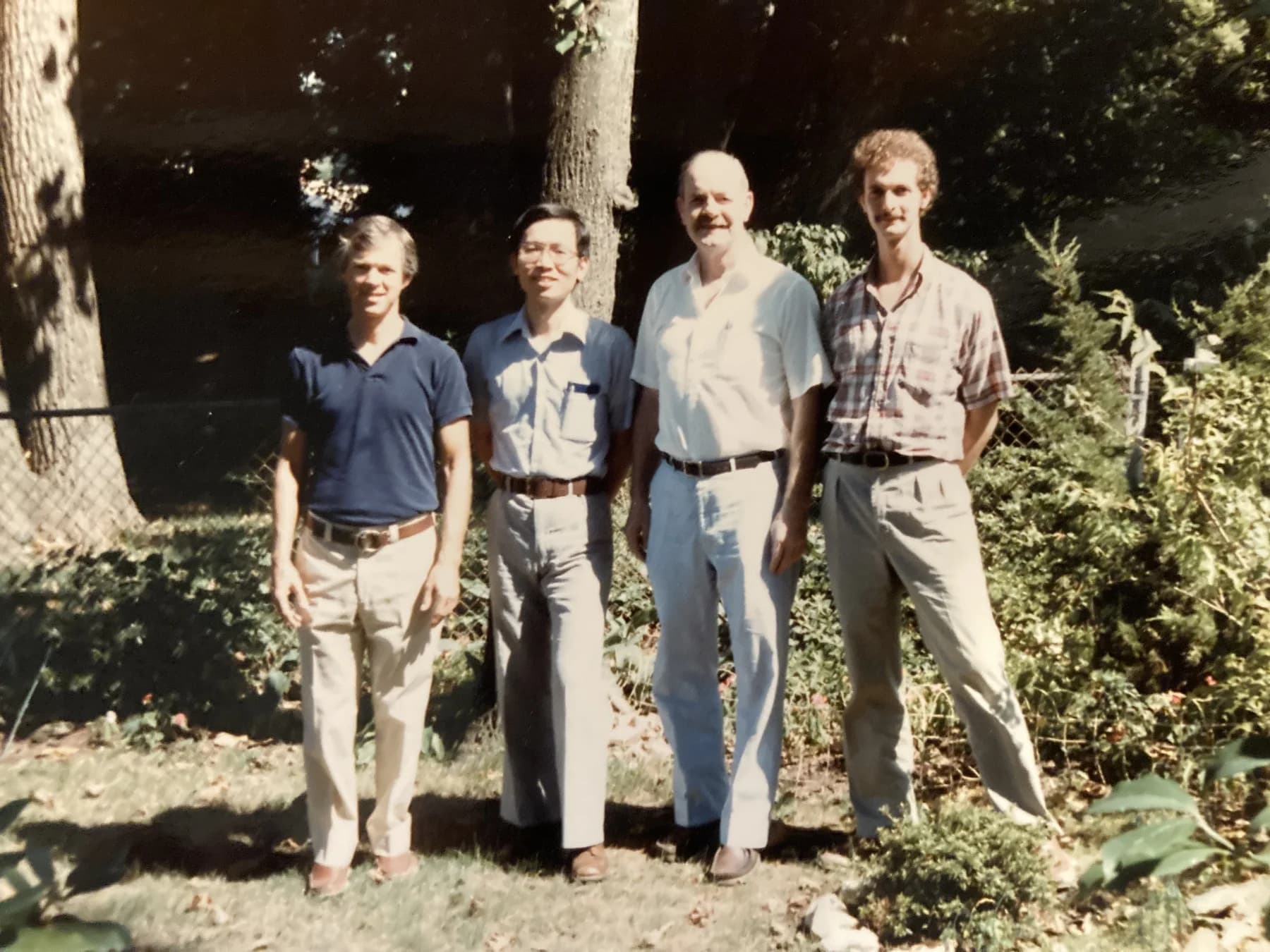
Archival group photograph with Robert W. Smith and a young Allen Pittman at right
Robert W. Smith · Allen Pittman at right · US archive

Ways knowledge travelled

The nature of a relationship is found in what teacher and student were able to exchange.

A lineage traces a body of practice through generations. Teaching also travels through challenge, trust, example, friendship and long return. Each relationship gave that movement a particular character.

Formative relationships

Three different ways a life changed direction.

01 · Robert W. Smith

Principal teacher · a demanding door

Smith’s book first rang the bell. His rare, offhand praise brought Allen back; his severity, learning and powerful will shaped a relationship Allen describes as twenty-five years. He gave Allen form, language and principle. Within those years Allen taught for Smith for eighteen and co-authored two books with him. Questions left open by that teaching helped send Allen to Taiwan.

02 · Hung I‑Mien

Direct teacher · lineage and trust

Hung had stopped trying to make a name as a teacher. He let Allen into his household, watched him work and gradually entrusted him with movements, applications, diagrams, a fighting poem and bone-setting. Allen calls him “empty” in a Daoist sense: not hollow, passive or absent, but free of self-display. Where Smith filled and directed a room, Hung left it open and gave his attention fully to the person and task in front of him.

03 · Tim Geoghegan

Close formative teacher · body, imagination and inner life

Allen recalls Tim arguing that the depth he had sought in Asia could also be found in Western physical and spiritual traditions. Wrestling could open into poetry, diet, Yoga Nidra, osteopathy, rites of passage and spiritual practice — without airs and without separating them from life.

01

Books become a meeting

Robert W. Smith · 25 years · form, language and provocation

The book opened the door. The limits sent Allen farther.

At fifteen, before he could drive, Allen had taught himself movements from Smith’s books and begun corresponding with their author. A friend drove him from Georgia to Washington so he could show Smith what he had learned from the page.

Smith’s response was complimentary only in his characteristically offhand way. Allen was ready not to return until senior student John Lang explained that Smith almost never praised anyone. What followed was a long relationship of private lessons, classes and conversations. Allen says directly, “I was with him for 25 years.” Within that larger span, he taught for Smith for eighteen years.

Smith taught form and principle, but also behaviour, philosophy and how to read a martial art inside its culture. Allen remembers the delivery as philosophical and almost hypnotic. He also remembers the man as formidable and difficult: someone who wanted to affect everything around him, with a mind that could calculate like a clock.

After seven years, Allen still lacked the tactical understanding he wanted. That absence became productive. He began asking whether Smith’s own teachers were still alive, and the question led him to Taiwan. Smith’s influence lies both in what he gave Allen and in the questions he made impossible to ignore.

The relationship eventually returned to books. Their work on Hsing-I and Pa-Kua carried embodied practice back onto the page and made Allen a collaborator in the literature that had first brought him to Smith’s door.

Smith’s teaching joined personal study in Taiwan with close, comparative reading. Kuo Feng‑ch’ih taught him variations of Sun Lu‑tang’s Single and Double Palm Changes and their practical meaning. Smith set these beside Sun’s 1916 book and a later variation shown by Wang Shu‑jin. Allen later studied Sun’s system separately. Smith’s Hsing‑I drew on his own teacher Yuan Tao, whose modified forms and Yunnan Lien Bu he passed on to Allen.

Hsing‑I transmissionYuan Tao · modified Hsing‑I · Yunnan Lien Bu
Teaching transmissionKuo Feng‑ch’ih · Sun-derived change variations
Personal instructionWang Shu‑jin · later variation · Taiwan
Classical text sourceSun Lu‑tang · Pa-kua Ch’uan Hsueh · 1916
Taiwan · 1982–1984

Trust became the ground of teaching.

Allen went to Taiwan looking for the tactical knowledge he still lacked: what the movements were for and how they worked against another body. In Hung I‑Mien he encountered a presence utterly unlike Smith’s — no need to control the room, but complete attention to the person and task in front of him.

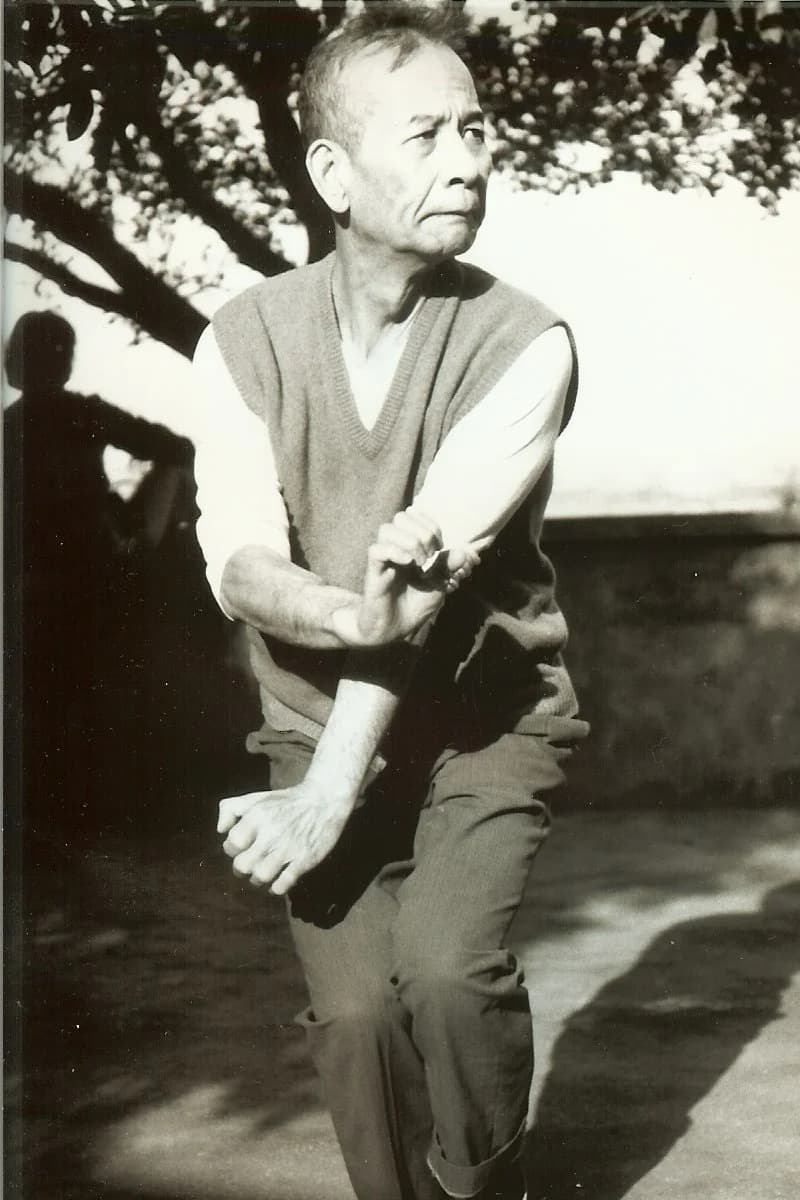
Hung I-Mien in practice outdoors
Hung I‑Mien in practice · Taiwan
Public class

Hung had largely withdrawn from teaching. Allen began in public practice: the internal arts in the early mornings, Mandarin study mid-morning, teaching English in the afternoons. Hung initially told him, in effect: I will teach you, though I do not yet know why.

Predestined relationship

Returning to live with the family made training part of ordinary life. Allen helped in the household, assisted while Hung treated patients and was taught bone-setting alongside the martial work. Hung later described their meeting as a predestined relationship.

Work that continued

Hung did not give Allen forms and leave him to guess at their purpose. He taught movements together with direct applications: how they met another body, changed position and produced an effect. He also passed two charts and a fighting poem, then told Allen to keep working. The transmission gave Allen a basis strong enough to test principles, recognise them in unfamiliar situations and develop further applications without returning endlessly to beginner material. Allen claims no exclusivity; the weight of the transmission was responsibility. A decade later Hung watched his work and confirmed its direction.

Open the Taiwan 1984 archive
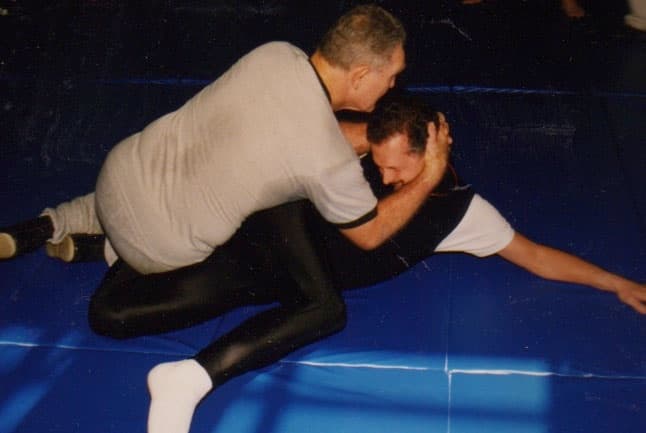
Tim Geoghegan and Allen Pittman training together on a wrestling mat
Tim Geoghegan and Allen Pittman · workshop archive
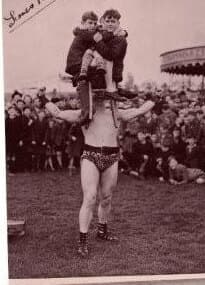
Young Atlas performing a strongman feat before a crowd

Young Atlas archiveThe public strongman years formed one chapter in the life of the teacher Allen later knew.

Tim Geoghegan · wrestling · Yoga Nidra · Totality of Being

He lived strength, healing and inner life as one thing.

Allen describes meeting Tim as life-changing. He had returned from Taiwan responsible for a Chinese art, but newly aware that he was not Chinese. Allen recalls Tim arguing that the depth he had sought in Asia could also be found in Western physical and spiritual traditions — particularly among the Celts.

Their first workshop moved without effort between wrist holds, conditioning, food, sleep and the structure of the body. Tim was gentle, practical and without display. He could make difficult knowledge simple without making himself superior. What Allen had dismissed as crude wrestling revealed extraordinary ingenuity.

That meeting became ten years of journeys between Atlanta and Black Mountain. Wrestling led to Irish poetry, rites of passage, Yoga Nidra, osteopathy, medicine and inner practice. Tim’s SPAN model — soma, pathos and nous; body, emotion and mind — gathered them into a practical field that ultimately turned toward spirit. He called the aim “Totality of Being.”

Allen later spent years assembling Young Atlas. The book carries forward the breadth of a man who showed him that strength, healing, culture and inner life did not need to be separated.

A film assembled by Allen · 2025

Allen remembers the teacher through the work.

This twenty-two-minute portrait gathers Tim’s wrestling history and physical culture into Allen’s testimony to the teacher he worked with for ten years.

Continue with Young Atlas

Further influences

Five relationships that opened the field.

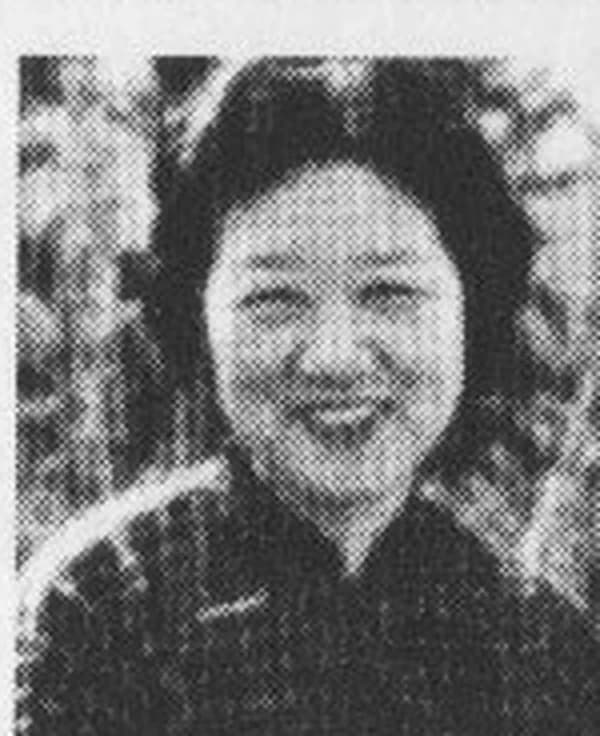
Archival portrait of Rose Li
Rose Shao-Chiang Li · archival portrait

01 · Rose Li · repeated study across two decades

A relationship measured in returns.

Repeated study and visits over more than two decades made Rose Li a major and lasting influence. Allen retained her Ba-Gua as a reference; he writes that he was never fully initiated by her and therefore does not teach it.

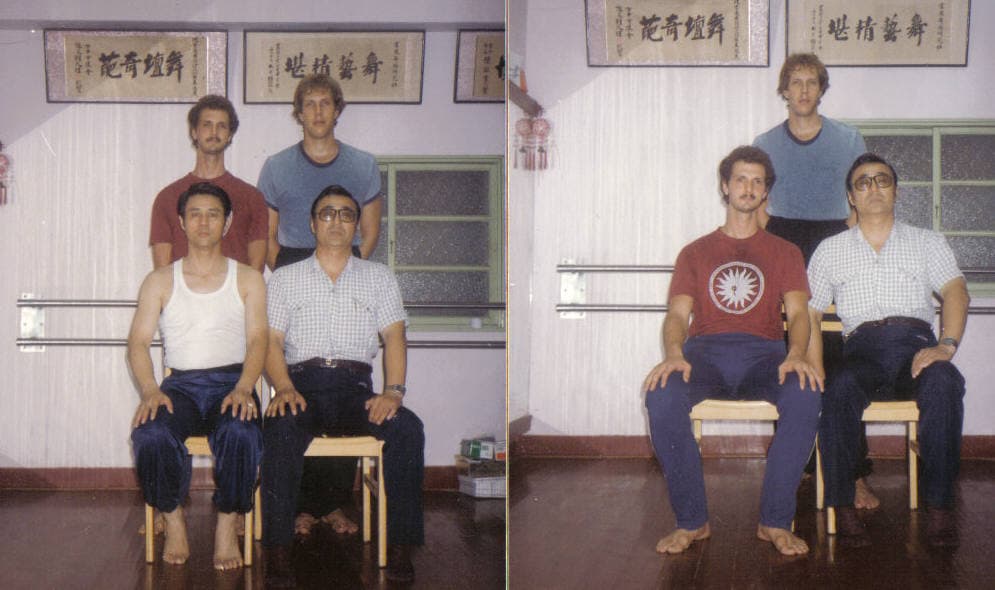
Allen Pittman with Chen Yun-Chao, Chen Yun-Ching and a fellow student in Taiwan
Allen Pittman · Chen Yun-Chao & Chen Yun-Ching · Peter · Taiwan archive

02 · Chen Yun-Chao & Chen Yun-Ching · family teaching in Taiwan

A second, distinct route through the internal arts.

With Marnix Wells’s help, Allen located one of Chen Pan-Ling’s sons, who became his teacher and introduced him to his older brother. With Yun-Chao and Yun-Ching, Allen studied their father’s synthesis of Hsing-I, Ba-Gua and Tai Chi, including Hsing-I animal forms he later brought back to Smith’s students. Allen says his teachers gave him permission to teach what he had learned. The relationship therefore gave him a living family transmission he could teach, preserve and compare with the Gao-Hung transmission without confusing the two routes.

03 · Khilton Nangmeithem · early 2000s

Sword, spear and safeguarding

Several seasons with the Manipuri teacher opened Thang Ta — Huyen Lallong, the method of safeguarding — as another meeting of body, weapon, culture and responsibility.

04 · Lobsang Nyima · ten years of study

Discipline, attention and responsibility

A decade of Tibetan Buddhist practice under Lobsang Nyima — who served as the Ganden Tripa, the head of the Gelug school — gave Allen a demanding education in attention, ethics and service. It became part of how he approached healing and inner work, without turning either into decoration for the martial arts.

05 · Brian Lynch · from the early 1990s

A wider history of the human being

Brian Lynch connected Allen’s physical and spiritual questions with Rudolf Steiner and a wider field of archaic wisdom. That conversation led into Waldorf education, Bothmer’s spatial work and Allen’s later studies of ancient Greek movement.

What Allen carries forward

A teacher’s task is to make departure possible.

01

Relationship before résumé

Years and titles say little on their own. Transmission depends on attention, trust and what teacher and student are actually able to exchange.

02

Practical courage

A teacher should give the student enough confidence, skill and orientation to continue — then get out of the student’s way.

03

Form and function

Received forms and applications establish the basis. Once their principles are embodied, the student can carry them into new situations without confusing later adaptation with what was transmitted.

With gratitude

This path was never made alone.

Teachers, training partners, translators, healers, hosts and friends each made part of the journey possible. Among the people Allen names with gratitude in his own accounts are:

Early foundations

  • Lawrence Huff
  • Peter Fabian
  • Danny Emerick
  • Harvey Hastings
  • Dr U Maung Gyi
  • Joseph Capshaw
  • Dr Kazuo Hori
  • Alice Moher

Chinese internal arts & Taiwan

  • Robert W. Smith
  • John Lang
  • Marnix Wells
  • Hung I‑Mien
  • Mei‑Rang Horng
  • Chen Yun‑Chao
  • Chen Yun‑Ching
  • Rose Li

Wrestling, weapons & healing

  • Tim Geoghegan
  • Khilton Nangmeithem
  • Rick Garcia
  • John Moulton
  • Tom Karls
  • Dr Pema Dorje
  • Dr Barry Clark
  • Dr Tenzin Choedak
  • Dr Yeshi Dhonden

Inner work & companionship

  • Lobsang Nyima
  • Brian Lynch
  • Bradford Riley
  • Lisa Lockhart
  • Randall Carlson
  • Owen Barfield
  • A.C. Custance
  • J.H. Brown
  • Michael Saso
  • Victoire Slakey

And the many students whose questions, practice and trust kept the work alive.

Continue through the work

The line is visible in the practice.